Nalanda 2.0 has an exceptional team Board of Directors, and Global Advisory Council consisting of leaders from the academia, industry and civil society. The team collectively has leadership, academic, administrative, and educational experiences from several world-class multidisciplinary research universities such as Stanford, Harvard, UC Berkeley and UC San Diego, and India's premier institutions such as the Indian Institutes of Technology (IITs) and the Indian Institutes of Management (IIMs). Team also includes a growing group of volunteers and supporters.

Meet the Team
The Nalanda 2.0 team brings together leadership, academic, administrative, and educational experiences from top multidisciplinary research universities such as Stanford, Harvard, UC Berkeley, and UC San Diego, and premier Indian institutions like the Indian Institutes of Technology (IITs) and the Indian Institutes of Management (IIMs).

Founder & President, Board of Directors
Shailendra "Shail" Kumar
Mr. Shailendra “Shail” Kumar is the Founder and President of Nalanda 2.0 and the author of Building Golden India: How to unleash India's vast potential and transform its higher education system. Now. (2015) This book is a catalyst for and foundation of Nalanda 2.0.
Shail launched Nalanda 2.0 in 2016 and has committed his full-time energy to its mission and plans ever since. In 2017, Nobel Laureate Prof. Randy Schekman presented the book to India’s Prime Minister, Shri Narendra Modi. He has advocated transformative educational reforms with key policymakers at the Prime Minister’s Office (PMO), NITI Aayog, and the National Education Policy (NEP) committee—many of which were incorporated into the 2020 NEP. From 2018–2025, he led the vision, strategy, and execution to build a world-class multidisciplinary research university in India, another Nalanda 2.0 initiative. In 2019—well before AI became mainstream—he championed an AI+X model for this university, where “X” represents any discipline or sector where AI can drive societal-scale transformation.
Prior to writing the book , Shail was an administrator at UC Berkeley and UC San Diego. Prior to that, he spent over fifteen years in Silicon Valley working in high-tech companies. He was co-founder and CEO of two start-ups, and held progressively senior roles in corporate strategy, global operations and planning, business development, and finance in Fortune 500 companies such as Applied Materials, FMC Corp., and Lam Research.
Shail has a B.Tech with honors in Mechanical Engineering from IIT Kharagpur and an MBA from the Kelley School of Business, Indiana University, Bloomington. He served as President of the IIT Foundation and co-founded the Pan IIT alumni movement in the US. In recognition of his contributions, he received IIT Kharagpur’s Distinguished Service Award.

Board of Directors
Arjun Malhotra
Mr. Arjun Malhotra is a pioneer of the Indian IT industry. He served as Chairman of Headstrong’s Board of Directors before its acquisition by Genpact in May 2011. Prior to Headstrong he was Chief Executive Officer and Chairman of TechSpan, which merged with Headstrong in October 2003.
Mr Malhotra is on the Board of Governors of ISB, Hyderabad, RGIIM Shillong and IIT (Kharagpur) Foundation. He is a past Co-Chair of the Global Pan-IIT Alumni Association. He is Fellow of IETE; A Member of Institute of Engineers, India. He is also a Member of IPSS and is on the Board of Governors of The Doon School. A Life Fellow of IIT Kharagpur, he has been awarded Doctor of Science (Honoris Causa) in September 2012. Punjab Technical University conferred an Honorary PhD on him in 2013.
Mr. Malhotra studied at The Doon School, Dehradun, graduated from IIT Kharagpur with B.Tech. (Hons.) in Electronics & Electrical Communication Engineering and received the Dr. B.C. Roy Gold Medal. In 1985, he attended the Advanced Management Program at Harvard Business School.

Board of Directors
Krishna Saraswat
Prof. Krishna Saraswat is Rickey/Nielsen Professor in the School of Engineering, Emeritus at Stanford University.
He was born in Pilani, Rajasthan, India and received all his initial education in Pilani leading to B.E. degree in Electronics in 1968 from the Birla Institute of Technology and Science (BITS). He moved to USA in 1968 and received M.S. and Ph.D. degrees in Electrical Engineering in 1969 and 1974 respectively from Stanford University. After graduating he joined Stanford University as a Research Associate in 1975 and later became a Professor of Electrical Engineering in 1983. He also has an honorary appointment of an Adjunct Professor at BITS, Pilani since January 2004 and a Visiting Professor during 2007 at IIT Bombay, India. He has been a technical advisor, board member and consultant to several industrial organizations in USA, Asia and Europe. He has also advised several academic and government organizations all over the world, including Indian Government, BITS Pilani, IISC Bangalore and IIT Bombay.
An award-winning faculty member, he is listed by ISI as one of the Highly Cited Authors in his field.
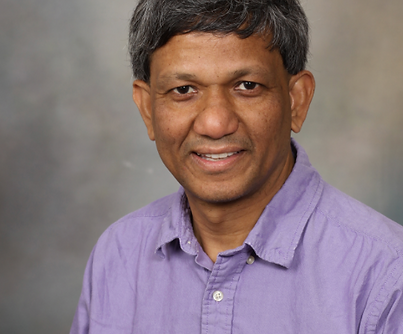
Global Advisory Council Member
Chitta Baral
Dr. Chitta Baral is a professor in the School of Computing and Augmented Intelligence in the Ira A. Fulton Schools of Engineering at Arizona State University. Chitta joined ASU in 1999 as an associate professor, becoming a professor in 2002. Prior to ASU, he served as an assistant and associate professor with the University of Texas at El Paso (Sept 1991 - August 1999).
Chitta did his B.Tech in Computer Science & Engineering at IIT Kharagpur and his Masters and PhD in Computer Science at the University of Maryland, College Park. He directs the laboratory of Cognition and Intelligence at ASU. His research focus is in various areas of Artificial Intelligence (AI). Chitta is the author of the book "Knowledge Representation, Reasoning and Declarative Problem Solving" published by Cambridge University Press. Chitta has been an Associate Editor of Journal of AI Research and the AI Journal, among the two top journals in the field of AI. Chitta is a past President of KR Inc, a not for profit Scientific Foundation concerned with fostering research and communication on knowledge representation and reasoning. He is a member of AAAI, the Association for the Advancement of AI and has published regularly in the annual conferences of AAAI. Chitta was a Research Affiliate at Mayo Clinic and continues collaboration with them.
Chitta's current research focus in on cognition and intelligence; in particular on understanding natural language, visual objects, and multi-modal documents; using knowledge in that understanding; and applying that understanding to cybersecurity, robotics and biological and health sciences.

Global Advisory Council Member
Parvati Dev
Parvati Dev, PhD, is CEO of SimTabs LLC and a graduate of electronics engineering from Indian Institute of Technology, Kharagpur. She completed her doctorate at Stanford University and did post-doctoral research on biological modeling at M.I.T.
It was a stint in industry that showed her that she could build products that changed how a physician or surgeon performed their task. As Vice-President of Research at CEMAX, Inc., she led the development of the first commercial 3D medical imaging systems for radiology and surgical planning. She returned to Stanford University to start a learning technology group that placed Stanford’s medical students at the leading edge of the e-learning revolution, winning awards along the way for her team’s use of high performance networks and virtual reality. In 2008, she began developing products commercially to do the same for the medical professional. Today her SimSTAT anesthesiology crisis simulations and her CliniSpace virtual hospitals provide spaces for nurses, doctors, pharmacists and therapists to practice together, learning in the safety of a simulation, correcting personal and team errors, and emerging with confidence in their ability to help real patients.
She is also a recipient of IIT Kharagpur's Distinguished Alumni and Distinguished Service Award and co-editor of a recently published book IIT Kharagpur Trailblazers (2024).

Global Advisory Council Member
Mohan Kankanhalli
Dr. Mohan Kankanhalli is Provost's Chair Professor of Computer Science at the National University of Singapore (NUS), where he is the Founding Director of the NUS AI Institute. He is also the Deputy Executive Chairman (Talent and Ecosystem) of AI Singapore, which is Singapore’s National AI R&D Program.
He was formerly the Dean of NUS School of Computing from 2016 to 2022. Prior to becoming the Dean, he was the NUS Vice Provost (Graduate Education) during 2014-2016 and Associate Provost (Graduate Education) during 2011-2013. He was earlier a faculty member at the Indian Institute of Science in Bangalore and a researcher at the Institute of Systems Science of NUS. Mohan obtained his BTech from IIT Kharagpur and MS & PhD from the Rensselaer Polytechnic Institute.
Mohan’s research interests are in Multimodal Computing, Computer Vision, and Trustworthy AI. He has made fundamental contributions in the areas of image and video understanding, visual saliency, content authentication, privacy, and trustworthy AI. He is also engaged in leadership roles in multimedia computing such as being the Associate Editor-in-Chief of IEEE Multimedia magazine. He is on the editorial boards of Springer Multimedia Systems and Springer Journal on Big Data.
As Director of NUS AI Institute, he leads research on multimodal models and trustworthy machine learning. He earlier directed N-CRiPT (NUS Centre for Research in Privacy Technologies) during 2018-2024, which conducted research on privacy on structured as well as unstructured data, working with industry, government and academic partners. Before that, he led the SeSaMe (Sensor-enhanced Social Media) Centre during 2012-2018. SeSaMe did fundamental exploration of social cyber-physical systems with applications in social sensing, sensor analytics and smart systems. Both SeSaMe and N-CRiPT were funded by Singapore’s National Research Foundation.
Mohan is a member of the ACM Global Technology Policy Council. He was a member of World Economic Forum's 2023-2024 Global Future Council on the Future of Artificial Intelligence.
Mohan is a Fellow of SNAS, IEEE, IAPR, and ACM.

Global Advisory Council Member
Sunil Kumar
Dr. Sunil Kumar is a Global Network Professor of Engineering at New York University (NYU) with appointments at NYU Abu Dhabi and NYU Tandon School of Engineering. From 2009 until 2015 he was a member of the core team that set up the new campus of the university in Abu Dhabi. He was the founding Dean of Engineering at NYU Abu Dhabi and then its Vice Provost for Graduate and Postdoctoral Programs. Prior to this assignment he was the Graduate Dean and Associate Provost at NYU Tandon School of Engineering, and previously was the Department Head of Mechanical, Aerospace, Manufacturing Engineering.
Kumar’s research interests are in the area of thermal radiation and optics, laser-material interactions, energy systems, fire dynamics, and applied mathematics. He received a PhD in Mechanical Engineering from the University of California at Berkeley, Masters degrees in Mechanical Engineering and Mathematics from the State University of New York at Buffalo, and an undergraduate degree in Mechanical Engineering from the Indian Institute of Technology at Kharagpur, India. He is a Fellow of the American Society of Mechanical Engineers and a Member of The Mohammed bin Rashid Academy of Scientists.

Global Advisory Council Member
Vimla Patel
Dr. Vimla Patel is a Senior Research Scientist at the Center for Cognitive Studies in Medicine and Public Health at the New York Academy of Medicine, with adjunct professorial appointments in Biomedical Informatics at Columbia University and Population Health Sciences at Weill Cornell Medical College. Trained as a PhD educational and cognitive psychologist at McGill University, she became a full professor in Medicine and directed both the McGill Cognitive Science Center and the Center for Medical Education. Her pioneering research laid the foundation for medical education, focusing on decision-making and expertise. More recently, her work integrates cognition, informatics, AI and cognitive science to augment human intelligence.
Internationally engaged, she has consulted for the World Bank and WHO. She is an elected Fellow of the Royal Society of Canada, the American College of Medical Informatics (ACMI), the International Academy of Health Sciences Informatics, and the New York Academy of Medicine. She has served as Associate Editor of the Journal of Biomedical Informatics and Assistant Editor of AI in Medicine and currently edits the Springer series Cognitive Informatics in Biomedicine and Healthcare. With over 400 peer-reviewed publications and seven edited books, she was honored with the ACMI’s 2021 William W. Stead Award for thought leadership, and the 2025 Distinguished Fellow award for her visionary contributions in cognitive informatics.

Global Advisory Council Member
Sridhar Rajagopalan
Mr. Sridhar Rajagopalan is an educational entrepreneur who has helped change the way student learning outcomes are seen in India. He is an IIT Madras - IIM Ahmedabad graduate who co-founded and ran Eklavya School Ahmedabad before starting Educational Initiatives (EI) in 2001.
EI researches and creates diagnostic assessments and offers ASSET, India’s largest diagnostic assessment. Mindspark, EI’s adaptive learning program, is used by over 500,000 students in India, the Middle East and the USA. It was the topic of a Harvard Business School case and featured in an Economist cover story. EI has worked with government schools in over 20 Indian states. Its Student Learning Study (supported by Google, Inc.) provides the most detailed picture available of student learning levels in 19 Indian states.
Mr. Rajagopalan is a member of various central and state government committees related to assessment and learning. He is or has been a board member of organisations like Central Square Foundation and Pratham, Gujarat.

Global Advisory Council Member
Dheeraj Sanghi
Prof Dheeraj Sanghi is the Dean of Student Affairs at Ashoka University. He has over three decades of academic, administrative, and leadership experience in higher education. He earned his BTech in Computer Science and Engineering from IIT Kanpur, and went on to complete his MS and Ph.D. in Computer Science from the University of Maryland, College Park, USA.
Prior to joining Ashoka, he served as Vice Chancellor of JK Lakshmipat University, Jaipur. He has held several senior leadership positions, including Director at Punjab Engineering College, Chandigarh; Director at LNMIIT Jaipur; Dean at IIIT Delhi and IIT Kanpur; and Professor of Computer Science at IIT Kanpur for over 25 years.
He has consulted with several industries. He is acknowledged as a thought leader in academia and known for his student-centric approach to implementing best practices in academic systems. He publishes a popular blog on higher education which has had more than 2 million hits so far. He has visited more than 100 academic institutions in India where he has talked about curriculum design, examinations, teaching/learning processes, and career planning.

Global Advisory Council Member
Edward H. Shortliffe
Dr. Edward H. Shortliffe is Chair Emeritus and Adjunct Professor in the Department of Biomedical Informatics at Columbia University's Vagelos College of Physicians and Surgeons. He has also held faculty positions at Weill Cornell Medical College, the University of Arizona, Arizona State University, the University of Texas Health Science Center (Houston), and Stanford University. A former President and Chief Executive Officer of the American Medical Informatics Association (AMIA, 2009-20212), he served as the founding dean of the Phoenix campus of the University of Arizona’s College of Medicine from 2007-2008.
After receiving an A.B. in Applied Mathematics from Harvard College in 1970, he moved to Stanford University where he was awarded a Ph.D. in Medical Information Sciences in 1975 and an M.D. in 1976. During his doctoral work in the early 1970s, he was principal developer of the medical expert system known as MYCIN, an early application of artificial intelligence in health care. After a pause for internal medicine house-staff training at Massachusetts General Hospital and Stanford Hospital between 1976 and 1979, he joined the Stanford internal medicine faculty (1979-2000) where he served as Chief of General Internal Medicine, Associate Chair of Medicine for Primary Care, and director of the Section on Medical Informatics. He spearheaded the formation of a Stanford graduate degree program in biomedical informatics and divided his time among clinical medicine, program management, and biomedical informatics research.
An elected member of the National Academy of Medicine and the American Society for Clinical Investigation, he has also been elected to fellowship in the American College of Medical Informatics, the American Association for Artificial Intelligence, and the American Institute for Medical and Biological Engineering. He is a Master of the American College of Physicians (ACP) and served as Editor-in-Chief of the Journal of Biomedical Informatics (2001-2020). Dr. Shortliffe’s awards include the Grace Murray Hopper Award of the Association for Computing Machinery in 1976, the Morris F. Collen Award of the American College of Medical Informatics in 2006, and the François Grémy Award of the International Medical Informatics Association in 2021. He has authored over 375 articles and books in the fields of biomedical computing and artificial intelligence.

Global Advisory Council Member
Svetha Venkatesh
Dr. Svetha Venkatesh is a Deakin Distinguished Professor and Co-Director of Deakin Applied Artificial Intelligence Initiative at Deakin University, Australia. She was elected a Fellow of the International Association of Pattern Recognition in 2004 for contributions to formulation and extraction of semantics in multimedia data, a Fellow of the Australian Academy of Technological Sciences and Engineering in 2006, and a Fellow of the Australian Academy of Science in 2021 for ground-breaking research and contributions that have had clear impact. In 2017, Professor Venkatesh was appointed an Australian Laureate Fellow, the highest individual award the Australian Research Council can bestow.
Professor Venkatesh and her team have tackled a wide range of problems of societal significance, including the critical areas of autism, security and aged care. The outcomes have impacted the community and evolved into publications, patents, tools and spin-off companies. This includes 740+ publications, three full patents, one start-up company (icetana) and two significant products (TOBY Playpad, Virtual Observer).
Professor Venkatesh has tackled complex pattern recognition tasks by drawing inspiration and models from widely diverse disciplines, integrating them into rigorous computational models and innovative algorithms. Her main contributions have been in the development of theoretical frameworks and novel applications for analysing large scale, multimedia data. This includes development of several Bayesian parametric and non-parametric models, solving fundamental problems in processing multiple channels, multi-modal temporal and spatial data.
She received her PhD in Computer Science from University of Western Australia, M.Tech in Electrical Engineering from IIT Delhi, and B.Tech in Electronics and Telecommunications from IIT, Roorkee.

Global Advisory Council Member
Kim Walesh
Ms. Kim Walesh is former Director of Economic Development and Deputy City Manager, City of San Jose.
At the City of San Jose, Kim led the implementation of city’s comprehensive economic strategy to catalyze job growth, private investment, revenue generation, and talent attraction. Prior to joining City of San Jose, Kim was co-founder and managing director of Collaborative Economics--a Silicon Valley-based consultancy that works with business and civic leaders to build stronger economies and better communities.
Kim is co-author of the books Grassroots Leaders for a New Economy: How Civic Entrepreneurs Build Prosperous Communities and Civic Revolutionaries: Igniting the Passion for Change in American Communities. She has written more than 50 other reports and publications, including key documents about the Silicon Valley region. She is a founding board member SPUR San Jose, the ZERO1 Art and Technology network, and the Prospect Silicon Valley innovation center.
Kim holds a bachelor’s degree in economics and humanities from Valparaiso University and a Master of Public Policy degree from Harvard University, where she was a Kennedy Fellow.

Core Team Member
Subhamoy Das
Dr. Subhamoy Das is a senior research scientist at Terremoto Biosciences. He completed his B.Tech in Biotechnology and Biochemical Engineering from IIT Kharagpur, M.S.E. and Ph.D. in Biomedical Engineering from University of Texas, Austin, and post-doctoral research from Stanford University. He was born and raised in Rourkela, Odisha.
He is volunteering for Nalanda 2.0 because: "I firmly believe that education is the key to the success of not only the individual but for the society, community and the country. Knowledge is power! I have personally embarked on the journey of becoming an academician to contribute to this noble cause. Nalanda 2.0's vision and ideas resonate with me. I'm passionate and hopeful that we will be able to bring Nalanda 2.0's mission to fruition."
Dr. Das has been an integral member of Nalanda 2.0 team since the inception.

Core Team Member
Vignesh Ganapathi-Subramanian
Dr. Vignesh Ganapathi-Subramanian is a Machine Learning engineer at Apple. He received his Ph.D. from the EE Department at Stanford University and B.Tech in EE, M.Tech in communication engineering from IIT Madras. He grew up in Chennai, Tamil Nadu.
He is volunteering for Nalanda 2.0 because he believes that the need for higher-education reforms in India is urgent, and Nalanda 2.0's vision for the future of higher-education in India is something that deeply resonates with him.
Dr. Ganapathi-Subramanian has been an integral member of Nalanda 2.0 team since 2019.

Core Team Member
Shailabh Kumar
Dr. Shailabh Kumar is a Staff Scientist at Samsung. Prior to this, he was a Postdoctoral researcher at Stanford University and Caltech. He earned his Ph.D. in Biomedical Engineering from the University of Minnesota–Twin Cities and holds a dual B.Tech/M.Tech degree in Biotechnology from IIT Kharagpur. He was born and raised in Patna, Bihar.
Dr. Kumar volunteers with Nalanda 2.0 because he strongly resonates with its mission: “Improvements in higher education and research in India have the potential to transform the country into a global technological hub. By advancing fields such as artificial intelligence, infectious disease management, antibiotic resistance, climate change, water management, and sustainable energy, we can address not only domestic challenges but also contribute to global solutions. A robust higher education infrastructure that empowers our youth to innovate is critical for India’s emergence as a major force in the world economy.”
He has been an integral part of the Nalanda 2.0 team since its inception.

Core Team Member
Rakesh Misra
Dr. Rakesh Misra is an R&D leader and entrepreneur at the forefront of AI-driven networking. He currently leads AI Networking for VeloCloud, a division of Broadcom, and was previously the co-founder of Uhana (acquired by VMware), a startup that pioneered mobile network intelligence. Dr. Misra earned his Ph.D. in Electrical Engineering from Stanford University and holds dual B.Tech and M.Tech degrees from IIT Madras. He was born in Bhubaneswar and grew up in Berhampur, Odisha.
He has been an integral part of the Nalanda 2.0 team since its inception, volunteering his time and expertise because he shares its vision of a world-class higher education system in India.

Core Team Member
Deepan Raj Prabakar
Dr. Deepan Raj Prabakar is currently a faculty at Plaksha University, Mohali, India. Formerly, he was a Post-Doctoral Researcher at the University of California, Irvine and Cornell. He received his Ph.D. from UC Berkeley, and B.Tech./M.Tech. from IIT Madras. He was born and raised in Chennai, Tamil Nadu.
He is volunteering for Nalanda 2.0 because "Transforming India's higher education is critical to prepare the growing young population for their lives and address many of India's grand challenges that accompanies the aspirations of this young population, which is food, water, health, clean environment and clean energy. In this regard, Nalanda 2.0's commitment for the same cause is timely, critical and commendable. Personally, I am very driven to do my part in addressing this grand challenge and so my support and time for Nalanda 2.0."
Dr. Prabakar has been an integral member of Nalanda 2.0 team since the inception.

Core Team Member
Usha RJ
Ms. Usha RJ received B.Tech and M.Tech from IIT Madras and MBA from IIM Kozhikode. Currently, she works as a consultant. She was born and brought up in Guntur, Andhra Pradesh.
She volunteers at Nalanda 2.0 as she believes that “Wholesome education has the power to transform society by equipping individuals with original, free and responsible thinking. In the age of artificial intelligence, it is imperative that institutions impart not just the necessary skills, but also educate, sensitize of the impact on the surroundings. An interdisciplinary understanding is the way forward in order to create sustainable and effective systems. One such mindful effort is UFI of Nalanda 2.0 which aims in setting up an interdisciplinary world class University in India.”
Ms. Usha has been actively working with Nalanda 2.0 since early 2020.

Core Team Member
Raj Shekhar Singh
Dr. Raj Shekhar Singh is a senior executive at Innovaccer Inc., San Francisco. He received his Ph.D. from UC Berkeley and B.Tech. from IIT Kharagpur. He was born and brought up in Bokaro Steel City, Jharkhand.
He is volunteering for Nalanda 2.0 because "I firmly believe that higher education is one of the key challenges facing India and a key blocker in making India a developed nation in the next couple of decades. I can also have much more impact in actually helping to solve this problem with my background and experience. My personal friendship with Shail Kumar and belief in his leadership also motivates me to volunteer for Nalanda 2.0."
Dr. Singh has been an integral member of Nalanda 2.0 team since the inception.